Minoterie
A minoterie is a factory that turns grain — chiefly wheat — into flour. The word comes from “minot”, an old measure of capacity for grain.
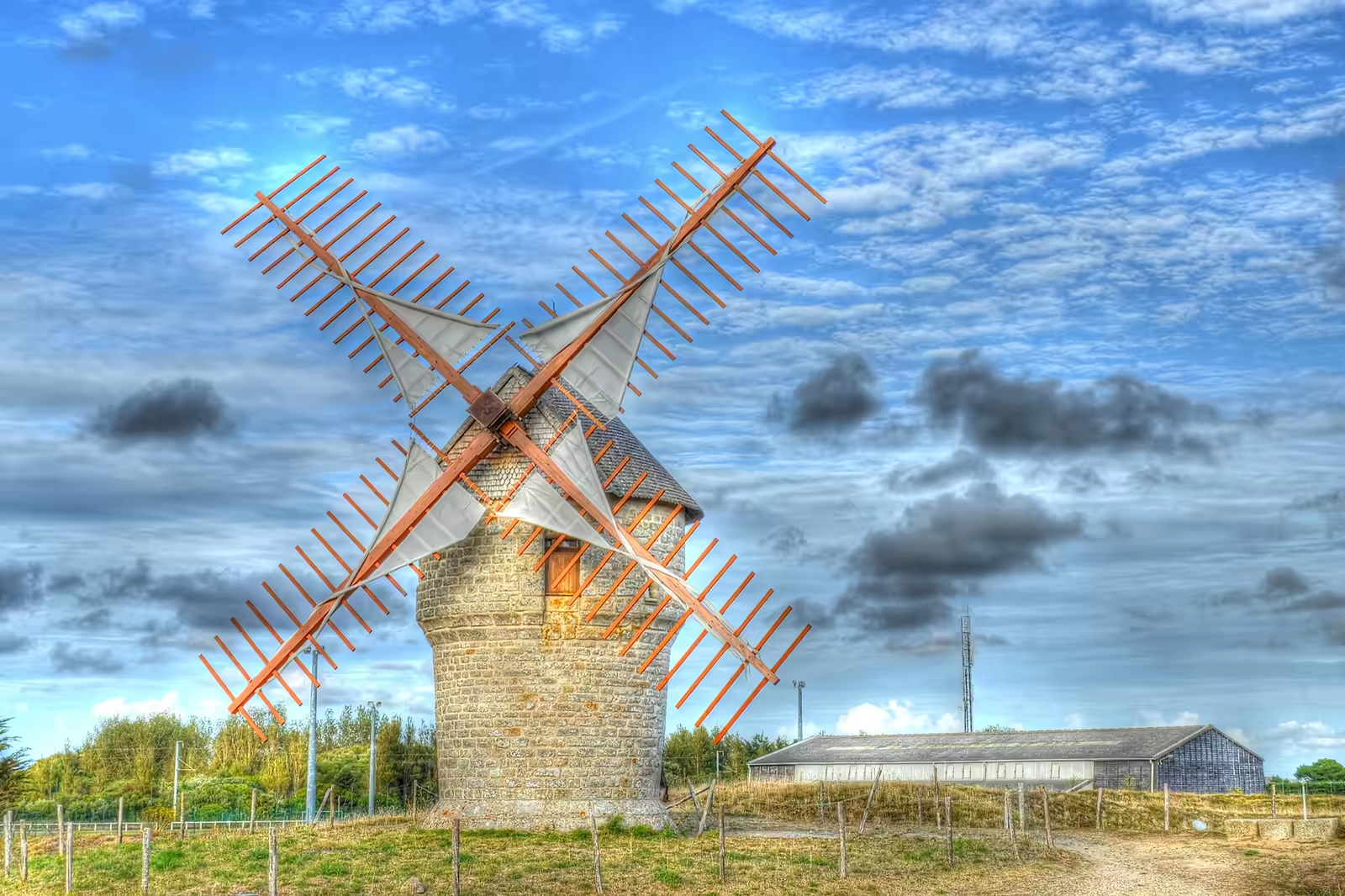
Photo: Yann Le Guilcher — Wikimedia Commons, CC BY-SA 4.0.
Unlike a traditional mill, where a stone millstone turned, the minoterie is an industrial tool: roller mills, plansifters and continuous production. It appeared in the 19th century as the industrial culmination of milling.
In a flour mill, wheat rises to the top of the building, then descends from machine to machine by gravity: roller mills first, then plansifters, to separate the bran from the floury endosperm. It comes out as flour on the ground floor. That vertical layout, over several floors, is the building’s signature — and the reason a minoterie is recognisable from afar, with its tall walls pierced by regular windows.
To go further:
Many minoteries, silent today, have been converted into homes, public buildings or gîtes. That is the case of the mills turned into holiday lets we describe in our conversion feature — and of a few of the large gîtes in our selection.